Stories
of Hope
A Practical Guide to Parent Advocacy
in the West Virginia Legislature
How to work with lawmakers to help your child and your family with education, health, and other important community issues.
We all have issues that are important to us.
Sometimes it's something in our daily lives that we think a change in the laws could help.
Sometimes it's fighting against a new bill that has been introduced, which would be deterimental to our child or family.
This is a practical guide on how to reach out to lawmakers, collaborate on new laws, open conversations about old laws or newly introduced bills, and generally have your voice heard by the people who make the laws.
Really Important Links
(bookmark these!)
Interactive Voter District Maps: Find your Senate or House district.
Senate Roster: Find your State Senate representatives.
House Roster: Find your House of Delegates representative.
Bulletin Board: General information for both the House and Senate during session.
Bill Status: Search for past or present bills.
2026 Information Packet: Contains maps of Capitol, seating charts, ect.
Visiting the Capitol During Legislative Session
Bring Your Kids!
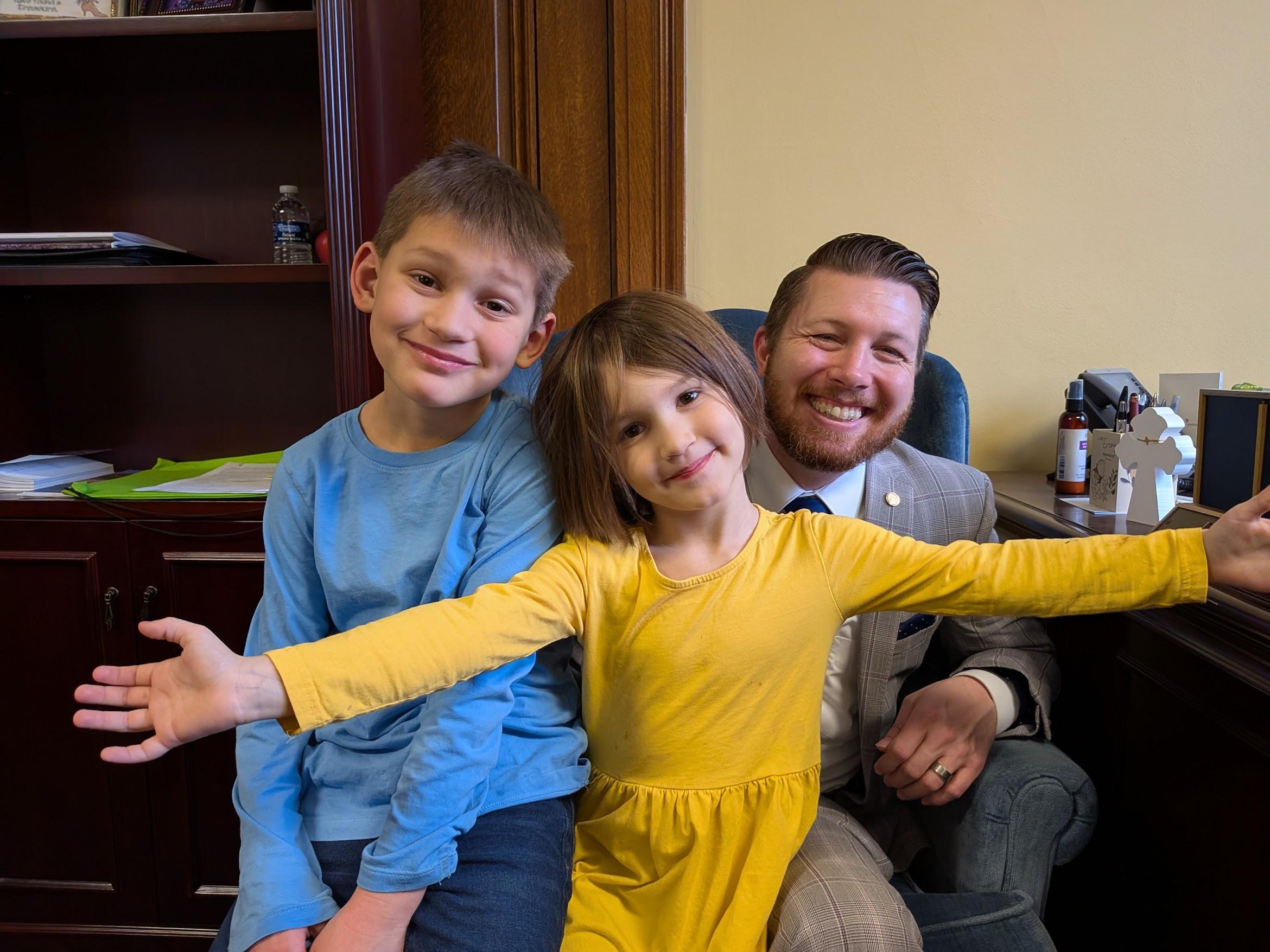
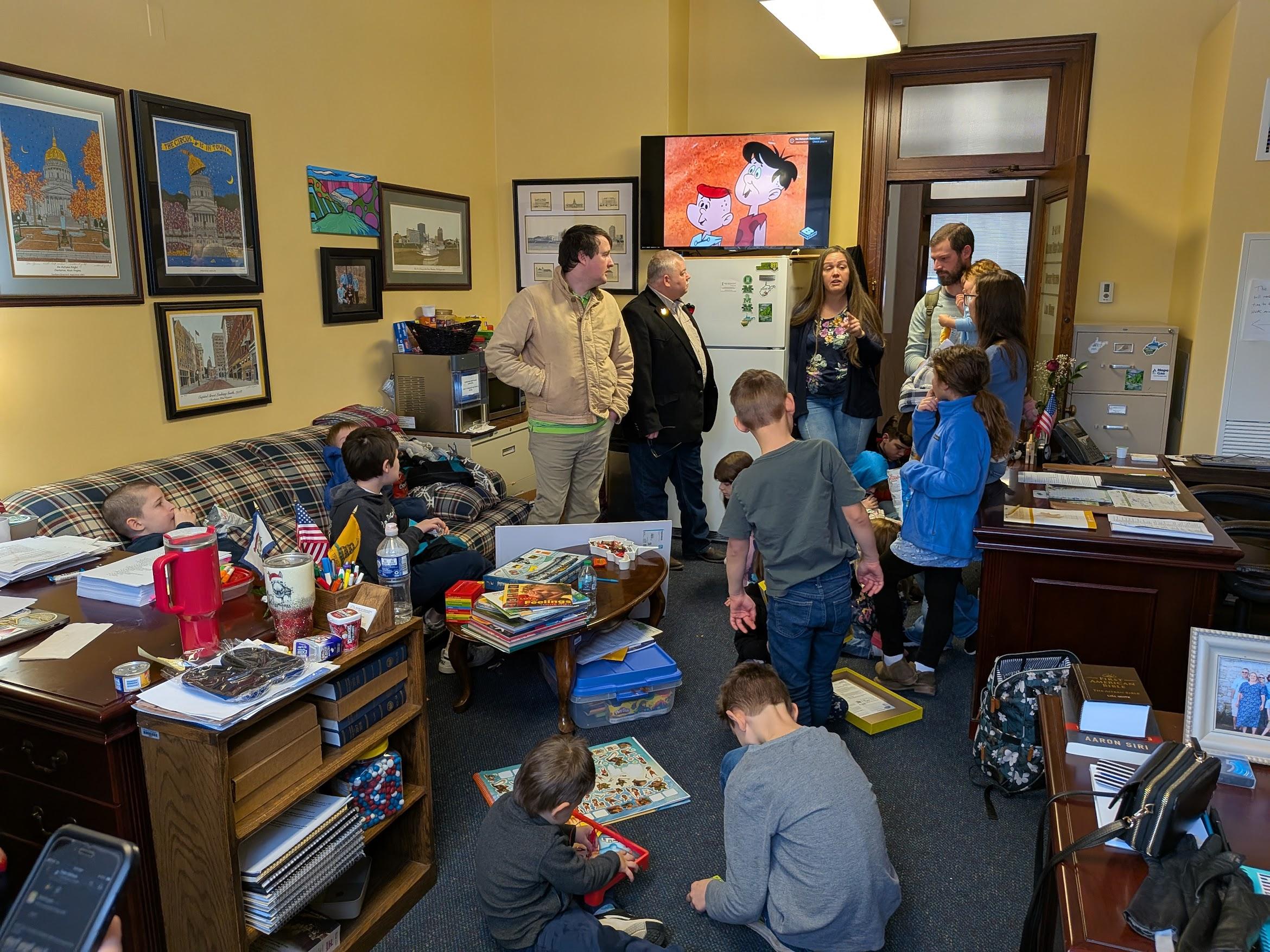
Going to the Capitol is a great way to introduce your children to the legislative process.
Delegates and Senators are generally delighted when kids show an interest in the Legislative Session. They will usually welcome them enthusiastically, invite them to take photos, and engage in conversations.
I recommend bringing kids of all ages to the Capitol for at least one day each Legislative session. This gives you a change to connect with lawmakers, and your kids a chance to experience the real life government process each year.
Check the Schedule
Earlier in the session is a good time to generally connect
Later in the session is typically when lawmakers are busy trying to get their bills passed or bills shot down before the final day.
Where to Park and Enter
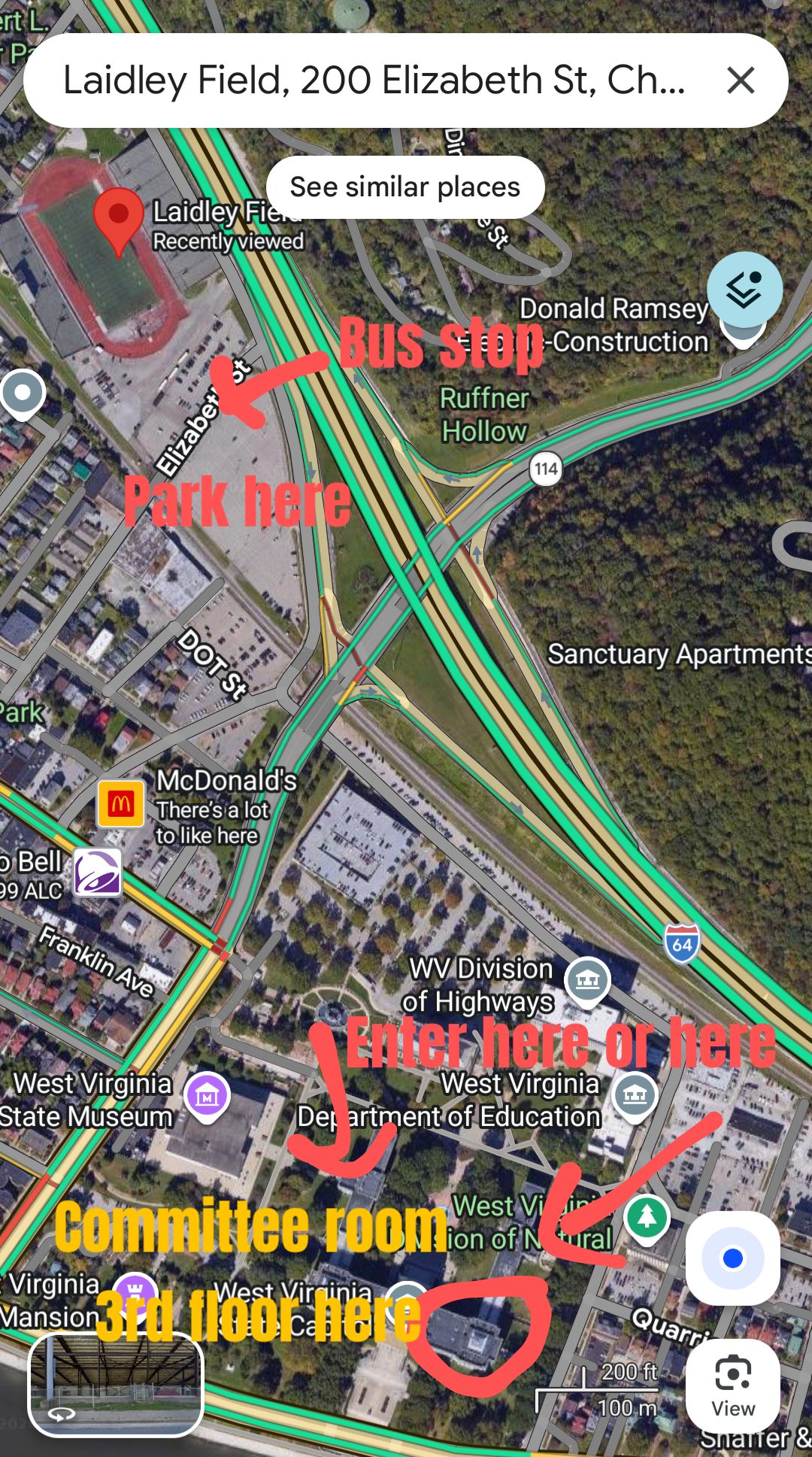
There is public metered parking next to the main garage at the Capitol. You need to get there REALLY early to score one of these spots.
Google Maps Pin to Public Metered Parking
Most of the time I plan to park at Laidley Field and take the Capitol Shuttle.
Google Maps Pin to Laidley Field Parking
Once you park, you can enter from the East or the West Wing public entrances. You will need to go through security, including a meter detector.
The East Wing of the Captiol Building is the House of Delegates side.
The West Wing of the Capitol Building is the Senate side.
In the center of the building is the rotunda.
The first floor of the Capitol is mainly administrative offices for the Governor, Treasurer, Attorney General, Secretary of State, State Supreme Court, ect.
The second floor is where you will access the Senate and Floor Chambers, and where most of the offices for Senators and Delegates are located.
The third floor has committee meeting rooms and the galleries for watching floor sessions.
In the basement there is a cafeteria and some other support services.
Here is a handy map of the Capitol that you can use.
Attending Committee Meetings
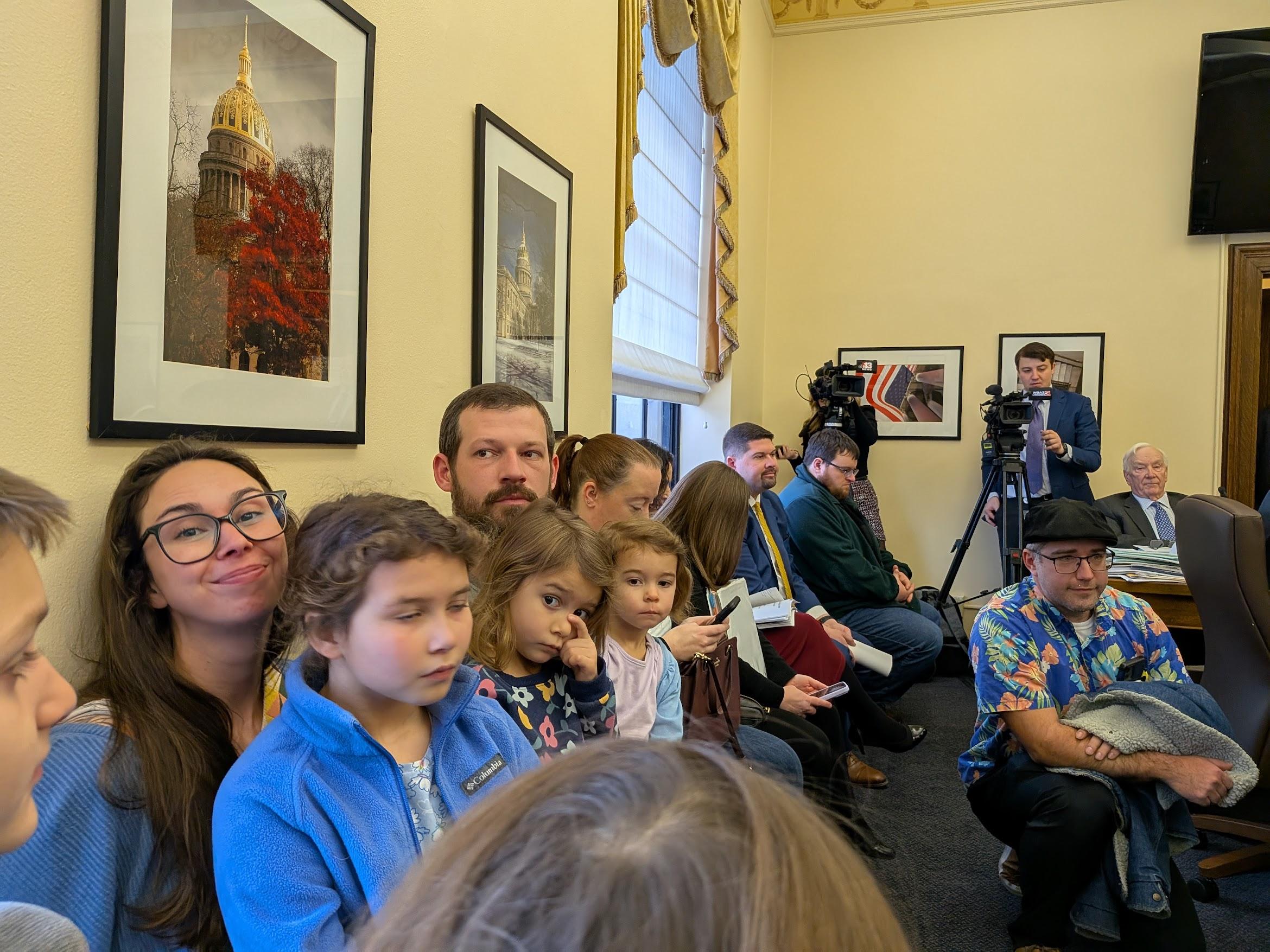
Committee meetings are where bills get promoted to the floor or never get on the agenda and die.
Attending a committee meeting can give you great insight into the information presented to representatives and their discussion process on whether to move a bill forward or not.
Some committees also give opportunity for public comment.
You can check agendas for committee meetings ahead of time, they are usually posted by the end of session for the next day.
Sitting in the Galleries
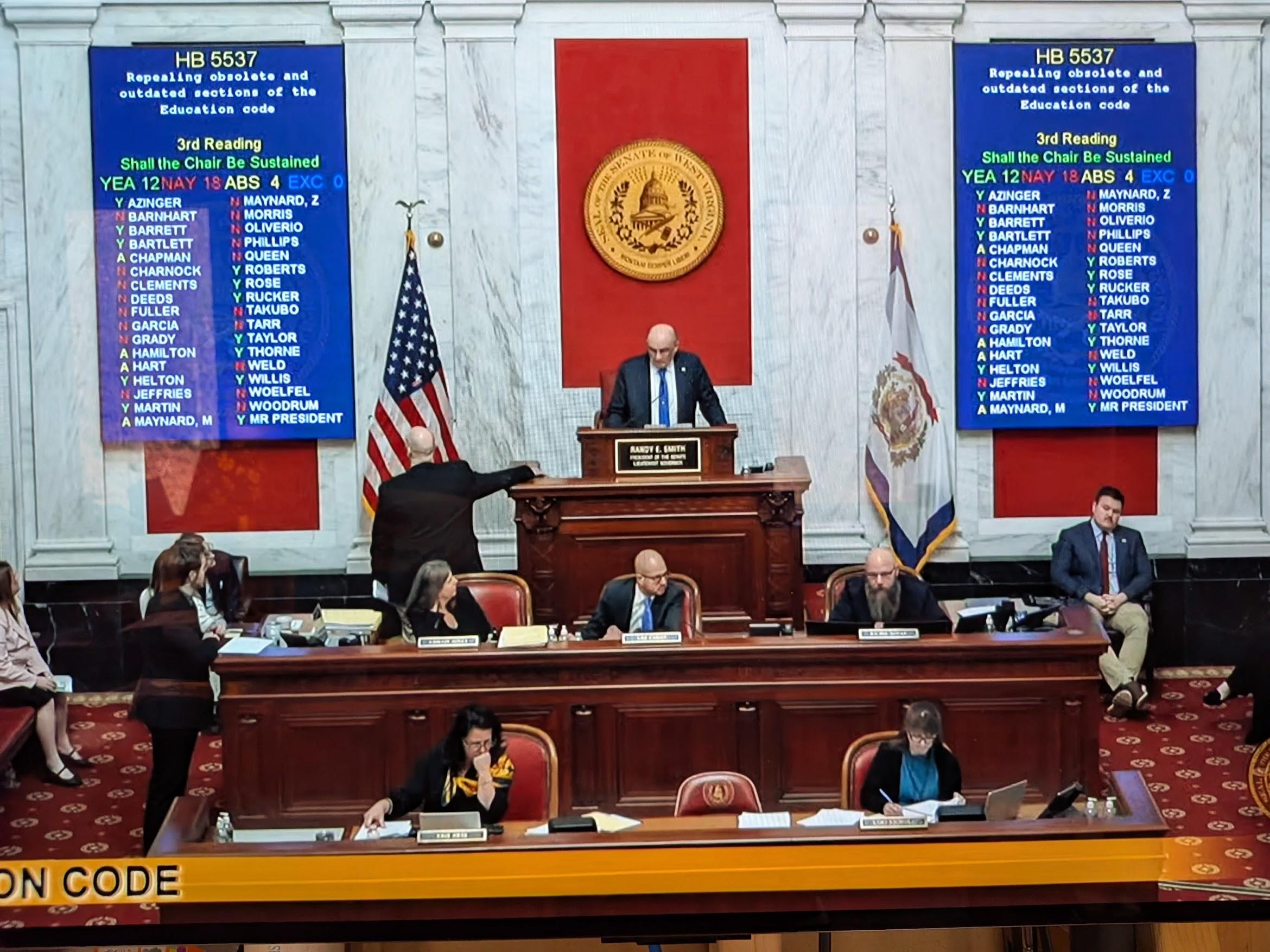
You can sit in the galleries of both the House and the Senate to watch session. The public is not admitted to the floor during session.
Galleries have some rules. You cannot bring food or drink, signs, or balloons into the galleries. You must be quiet. Photos and videos also are not allowed when they are in session.
If you let your Delegate or Senator know you are visiting and sitting in the gallery, often they will introduce you at the beginning of session. This is always a really fun thing for kids!
If you cannot attend session in person, there is live video on YouTube that you can watch.
Finding Your Senator or Delegate's Office
If you don't know who your Senator or Delegate is, the first step is to check the Interactive WV Voter Map.
Then, you can look up your Senator or Delegate and find their office on the information packet.
Other Fun Things to Do In the Capitol
Important Steps In the
West Virginia Legislative Process
For actual dates, see the official Legislative Calendar for 2026.
1. Primaries
Primary races are easily overlooked, but they should not be. Which candidate wins the primaries is especially critical for issues that are contentious within one political party.'
These races can also include some critical local roles such as your county's school board, magistrates and judges.
The primary election for this year is coming up on May 12, 2026.
2. General Election
The general election is going to determine which candidate serves your district for the next two or four years.
2026 is a midterm election, which means that the elections include half of the state Senators (one for each district) and all of the state Delegates, but will not include major executive positions like Governor or Attorney General.
This year's midterm election will be held on November 3, 2026.
3. Choosing House Speaker and Senate Majority/Minority Leaders
The House of Delegates members will choose their Majority and Minority Leaders.
The State Senators will choose the Speaker of the House. This role is critical because the Speaker appoints Senators to Committees, appoints Committee leaders, and determines what bills get added to the Senate Calendar.
These leaders can decide what bills have a chance and which bills do not merely by choosing not to place them on a calendar.
4. Committee Assignments
These meetings are generally held in December. It is where the House and Senate committees combine and invite presentations on particular topics of interest for that committee. It helps them prepare for the upcoming session.
6. First Day of Session
7. Introduction of Bills
8. Committee Meetings
When a bill is introduced, it gets assigned to Committee. The Committee leadership determines what bills get on the Committee agendas, and the membership discusses and votes on the fate of those bills.
This is where you can watch and hear a lot of the detailed information presented and understand why or why not a bill gets moved to the floor for a vote.
9. Twentieth Day
10. Thirty-Fifth Day: Last Day to Introduce Bills in the House
11. Forty-First Day: Last Day to Introduce Bills in the Senate
12. Forty-Seventh Day: Crossover Day
13. Fiftieth Day
14. Sixtieth Day: Adjournment at Midnight
The West Virginia Legislature
In order to understand how to work with members of the legislature, you must understand how the legislative process in West Virginia works.
There are two different wings (both literally and figuratively) of the West Virginia Legislature. They are the House of Delegates and the Senate.
Both bodies draft and introduce laws. Both have a committee process. Both must agree on a bill before the bill can become law.
Once both the House and the Senate have majority voted "yea" on a bill, it goes to the Governor. The Governor has a certain number of days (depending on the bill and the timing in the Legislature) to sign or veto the bill. If the Governor does not sign or veto the bill in that time, it automatically becomes law without his signature.
West Virginia
House of Delegates
100 Members
Two Year Terms
All members up for re-election
every two years
No term limits
West Virginia
State Senate
34 Members
Four Year Terms
Half of members up for re-election
every two years
No term limits
Next Primary Election Date: May 12th, 2026
Next General Election Date: November 3rd, 2026
How Bills Are Introduced
Bills are potential new laws. They are drafted by lawmakers in the House of Delegates and the Senate, with the help of legal counsel and collaboration with state employees, constituents, lobbyists and other stakeholders.
This is your first opportunity to help make changes to the state laws. Don't wait until session to talk to your representatives! Start thinking about a law that might help improve your child's life - or a law that is hurting them. Go and speak to your legislative representatives about it. Call their office and make an appointment, write them a personal email, or give them a call.
Be prepared to share specific information about how your idea could help children in our state. Bring data to back it up if you are able. It is especially helpful if you can identify the section of state code you think should be modified or removed.
Share your story - this can be really powerful. Even if your representatives do not politically align with you, they will likely be happy to have a respectful conversation with you, and may leave your conversation with some new ideas or awareness they did not have before.
The biggest thing here is to be respectful of their time and considerate. Do not go into these conversations combative - try to be collaborative. You can be passionate without being angry or vulgar.
Advocacy Reference Page Link

Stories
of Hope
West Virginia State House of Delegates
2026 District 4 Candidates
Joseph Jividen
Democrat
Hope Stance: Unknown
Derek Joseph Ennis
Republican
Hope Stance: Unknown
Adolph William Santorine
Republican
Hope Stance: Unknown
This page is operated entirely by parent volunteers. We receive no funding from outside sources, no pay, and have no affiliation with the Hope Board Staff or any other party associated with administering Hope Scholarship funding.
The volunteers who operate this website can be contacted at:
You can donate to help us operate this page. At this time we are NOT a nonprofit or 501(c)(3) (this takes money and time to form). Your donation will be used to pay for website hosting, email, and general Hope advocacy, which may include helping us form a nonprofit.
Official Hope Scholarship Website
(we are NOT the official Hope Scholarship Website)
HOPEshoolers in West Virginia Facebook Group
(we are NOT affiliated with the State Treasurer's Office)